Is Deli Paper the Same as Greaseproof Paper?
Published on 2025/12/19
Share to:
Is Deli Paper the Same as Greaseproof Paper?
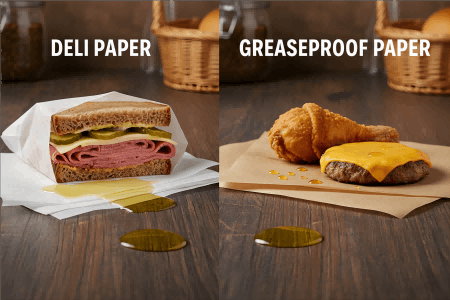
Are deli paper and greaseproof paper the same? While both are food-safe papers, they serve distinct purposes. Deli paper, wax-coated and decorative, is ideal for wrapping sandwiches, burgers, or lining food trays. Greaseproof paper, on the other hand, is designed for baking and cooking, offering superior grease resistance and heat tolerance.
When working in the kitchen or packaging food, it's easy to get confused by the range of specialty papers available. Two common types are deli paper and greaseproof paper, both of which serve specific purposes. While they may seem similar at first glance, they have distinct properties and uses that set them apart. Here's a detailed look at the differences and similarities between deli paper and greaseproof paper.
What is Deli Paper?
Deli paper is a lightweight, wax-coated or parchment-like paper commonly used in the food industry. It is designed to prevent food from sticking to surfaces and is often used for wrapping sandwiches, burgers, and other prepared foods. Deli paper is more versatile and moisture-resistant, while sandwich paper is straightforward and designed for basic wrapping purposes.
Key Features of Deli Paper:
Wax Coating: Deli paper typically has a thin coating of wax on one or both sides, which provides a non-stick surface and a degree of moisture resistance.
Versatility: It’s used for wrapping food items, lining baskets or trays, and even as a disposable placemat.
Food Safety: Deli paper is food-grade and safe for direct contact with edible goods.
Aesthetic Appeal: Many deli papers come with decorative prints or patterns to enhance food presentation.
What is Greaseproof Paper?
Greaseproof paper, also known as baking parchment in some regions, is a specialized paper designed to resist grease and oil. Unlike deli paper, it is often used in baking and cooking applications due to its heat resistance.
Key Features of Greaseproof Paper:
Grease Resistance: The paper is treated to create a barrier against oils and fats, making it ideal for baking cookies, pastries, or lining cake tins.
Heat Resistance: Greaseproof paper can withstand high temperatures, which makes it safe for use in ovens.
Non-Stick Surface: It helps prevent food from sticking to baking trays or pans, reducing the need for additional greasing.
Multiple Uses: Beyond baking, it can be used to wrap greasy foods like cheese or fried items.
Key Differences Between Deli Paper and Greaseproof Paper
| Aspect | Deli Paper | Greaseproof Paper |
|---|---|---|
| Coating | Thin wax coating for moisture resistance. | Special treatment for grease resistance. |
| Heat Resistance | Not designed for high-heat applications. | Safe for use in ovens and at high temperatures. |
| Primary Use | Wrapping and serving food. | Baking, cooking, and lining trays. |
| Grease Handling | Some resistance but not entirely greaseproof. | Excellent resistance to grease and oils. |
| Reusability | Usually single-use. | Often reusable for multiple baking sessions. |
| Appearance | Often decorated with prints or patterns. | Typically plain or unprinted. |
Can They Be Used Interchangeably?
In some cases, deli paper and greaseproof paper can be substituted for each other, but this depends on the specific task:
For Wrapping Foods: Both papers can be used to wrap sandwiches, burgers, or other items. However, deli paper is more pliable and often preferred for this purpose.
For Baking: Greaseproof paper is the clear winner here, as it can withstand the heat of an oven, while deli paper is not designed for high-temperature use.
For Greasy Foods: While deli paper offers some grease resistance, greaseproof paper is more effective for handling oily foods.
Conclusion
While deli paper and greaseproof paper share similarities in their roles as food-safe papers, their differences make them suited to specific tasks. Deli paper is ideal for wrapping, serving, and presentation, while greaseproof paper is a must-have for baking and cooking. Understanding these distinctions ensures you’ll always choose the right tool for the job, whether you’re preparing a meal or packaging food for customers.


 WhatsApp
Send us your message
You can send an email asking for the price and detailed information of this product. We will reply you as soon as we receive your email